How cloud cover affects nightly satellite flare counts
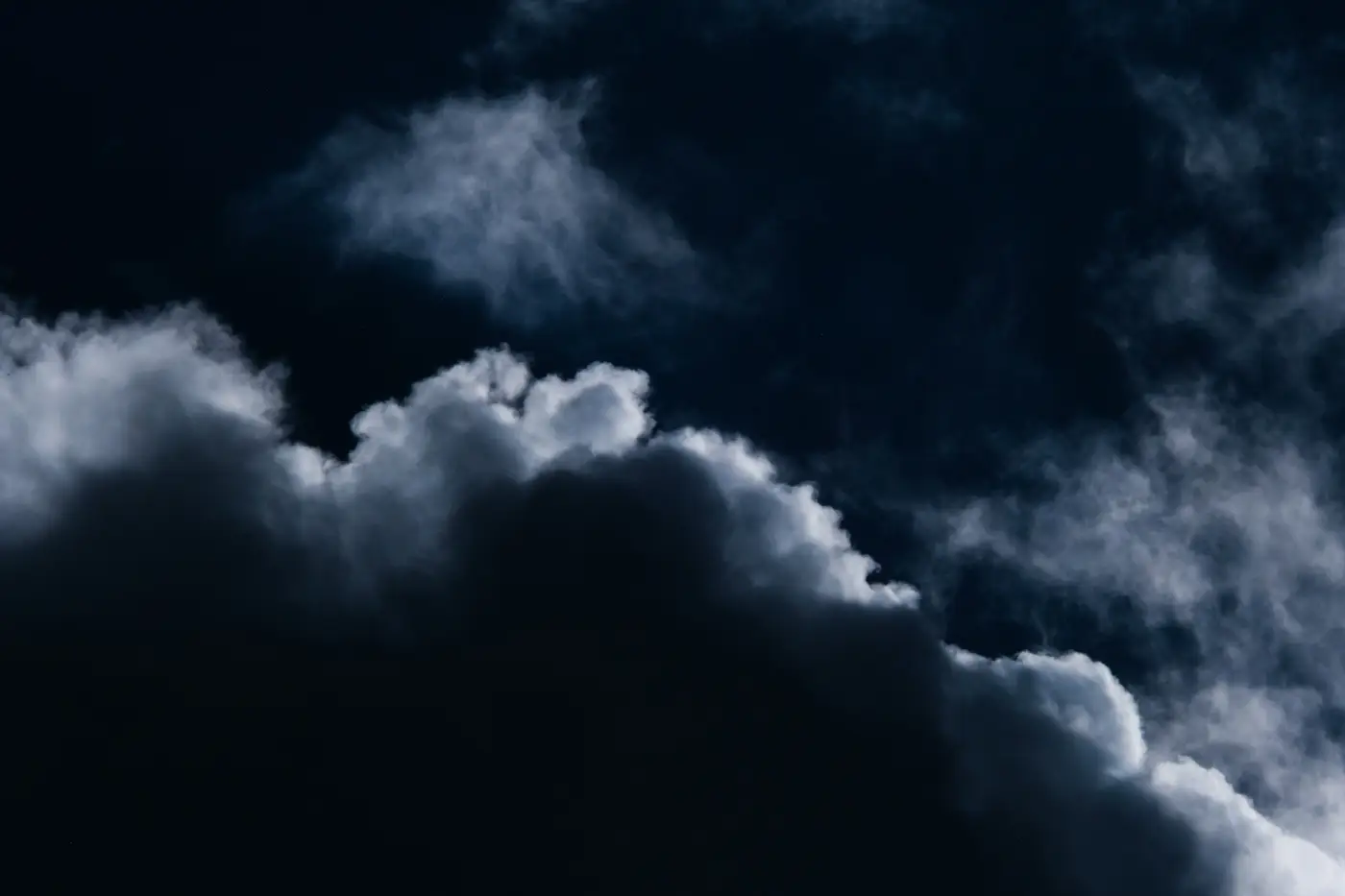
A night with heavy cloud cover is a night the sensor doesn't see the ground. That sounds obvious once you say it, but it's the single most common reason a flare that burned all night shows up as absent in a nightly log, and it trips up anyone new to reading satellite-derived flare data against operator reports.
Thermal and SWIR detection works by picking up the heat signature of a flare stack against the surrounding land or water. Cloud, especially low-level cloud or a thick haze layer, sits between the sensor and the ground and either blocks the signal outright or scatters it enough that the flare doesn't register as a distinct hot pixel. Thin high cirrus sometimes lets enough signal through to still flag a flare. A low stratus deck over a field at 2am usually doesn't.
Why this is weather, not a software gap
No coarse-res nightly pass, from any provider, can see through a solid cloud deck. The orbit comes over, the pass happens, and if the sky over that patch of the monitoring area is socked in, that pixel's read for the night is cloud, not ground. The next clear night, the same stack lights up again exactly where it did before.
For a regulator cross-checking flaring permits or an ESG analyst using flare counts as a production proxy, the practical question isn't "does the sensor ever miss a flare." It's "how many nights in a row were missed, and does that line up with weather, not with the flare actually going out." A single missed night on an otherwise active stack is noise. A run of five or six missed nights that coincides with a storm system moving through the basin is a weather gap, not a shutdown. A run of missed nights with clear skies logged for every other site in the same area is the signal worth a phone call.
Reading around gaps in a nightly flare log
A few things help separate a cloud gap from an actual change in flaring activity:
- Check whether neighboring flares in the same monitoring area also went dark on the same nights. Weather fronts don't respect lease boundaries, so a regional cloud event will blank out several stacks at once.
- Look at the run length. One missed night is routine. A multi-week gap is either a persistent weather pattern (common in coastal basins and during monsoon season) or something else worth flagging.
- Compare against public weather data for the area. Overlaying satellite cloud cover for the same nights usually confirms the pattern in under a minute.
- Treat a reappearing flare after a gap as the stronger signal than the gap itself. If the stack lights up again at the same size once skies clear, the gap was weather. If it comes back smaller, or not at all, that's the change worth reporting.
None of this means a nightly log is unreliable. It means a log is a log of nights observed, not a guarantee of nightly coverage on every site, every night, regardless of sky. Operator self-reporting has its own blind spot, namely that it relies on the operator to report accurately and on time. A satellite-derived log has a different, more honest blind spot: weather. One is disclosed up front and checkable against a public record. The other usually isn't.
For analysts building a flaring history into a reporting cycle, the useful habit is to pull the log over a window long enough to average out individual cloudy nights, rather than treating any single night's count as final. A month of nightly reads tells you much more about actual flare size and frequency than any one night can, cloud cover or not.
Flare Monitoring builds that nightly log from thermal and SWIR passes so you have a running record to check against, gaps and all, instead of starting from operator disclosure alone. If you're tracking flaring activity for a monitoring area and want to see what a nightly log looks like in practice, that's the place to start.